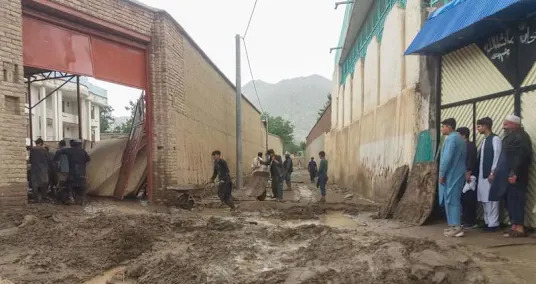
At least 61 people have been killed and 116 injured across Afghanistan since March 26 due to heavy rainfall, floods, landslides and lightning strikes, the Afghan government said on Saturday.
At least four people were still missing after floods affected thousands of families and damaged 2,448 houses, Afghan government spokesman Zabihullah Mujahid said in a post on X.
In addition, thousands of hectares of cropland was also destroyed, posing serious risks to rural communities who rely on agriculture for their livelihoods.
Deadly flooding has struck Afghanistan repeatedly in recent years, causing significant loss of life, injuries and widespread damage to homes, infrastructure and agricultural land.
Extreme weather events such as flash floods and droughts are increasing in Afghanistan, which experts link to the climate crisis.
Despite having a negligible carbon footprint, the country ranks among the most climate-affected nations and remains ill-prepared to cope after decades of conflict, poor infrastructure and a struggling economy, compounded by recent earthquakes and severe flooding.
latest_posts
- 1
 ‘More should be done’: UN pushes Syrian regime on justice for Druze, Alawites and minority groups
 - 2Are Iraqi militias crossing into Iran to support Iran's war effort?
- 3Pfizer says patient dies after receiving hemophilia drug in trial
- 4Displaced Palestinian families suffer as heavy rains flood Gaza tent camps
- 5Getting Your Youngsters' Future: Grasping Legacy Regulations




- Zelensky names spy chief to head presidential office after corruption row
- Malaysia To Revive Search for Missing Flight MH370
- Smartwatches: Remain Associated and Dynamic
- NASA Artemis II tracker: Where is the Orion now and when will it reach the moon?
- Instructions to Grasp the Innovation Behind 5G Pinnacles\
- Step by step instructions to Recognize the Distinction Between Lab Jewels and Precious stone Simulants
- Impact of NIH funding reductions felt in cancer and infectious disease trials
- The secret appeal of Harlan Coben’s messy, addictive TV thrillers
- How to Build a Yard That Helps Monarchs During Spring Migration